A buyer looks at the LandSearch page for Franklin County and sees an average of $29,716 per acre across the farms currently listed. A seller inheriting a family tract in Peters Township looks at the same number and starts drafting a listing conversation in their head. Both are working from a figure that describes almost nothing about their actual transaction.
The reason is not that the number is wrong. The reason is that Franklin County is running two land auctions at the same time under one county line, and a third factor sitting inside the tax assessor's office quietly decides which auction your parcel is in.
The county-wide per-acre number is a blend, not a benchmark. Preservation demand pulls from one side, I-81 warehouse demand pulls from the other, and Act 319 rollback rules set the ceiling on what either buyer can actually pay you at closing.
The two auctions running under one median
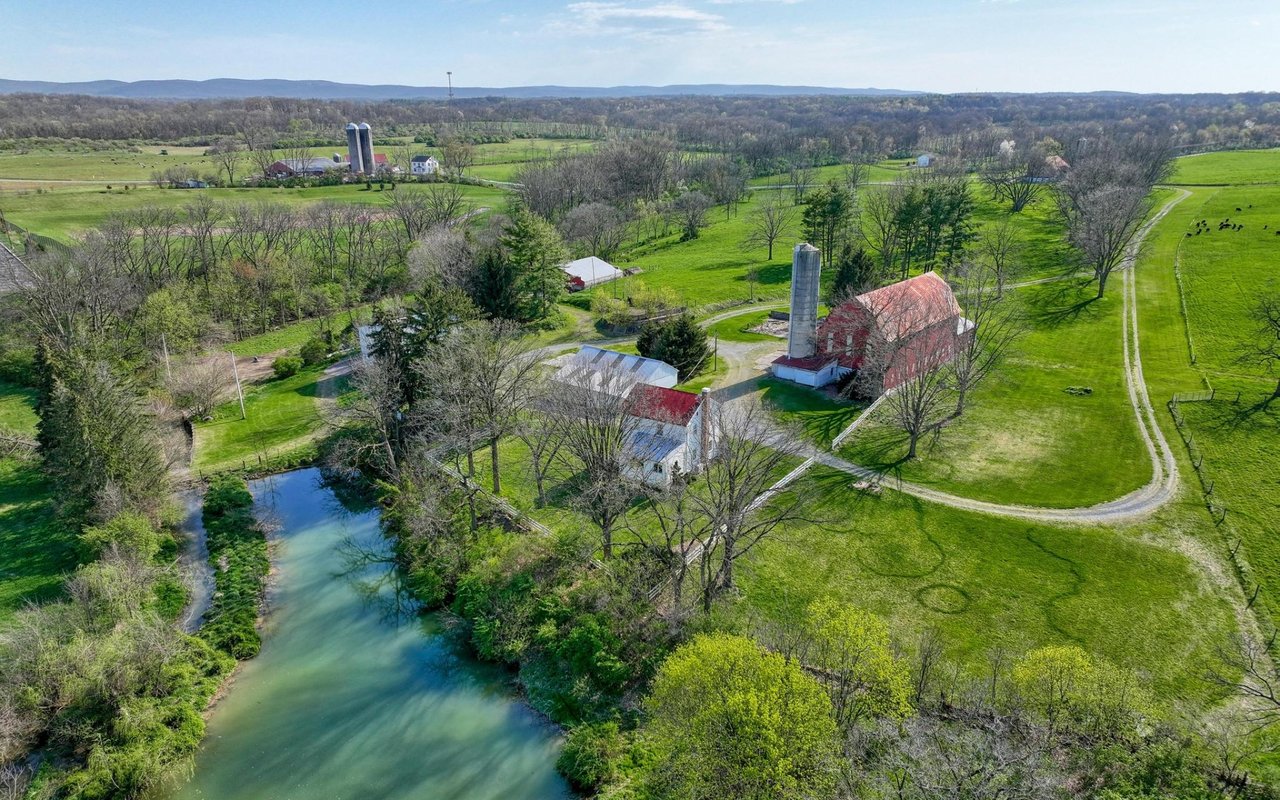
On one side is a working agricultural buyer pool that has been organized and funded for decades. Since 1990, Franklin County and the commonwealth have combined to invest more than $45 million to preserve 170 area farms and over 20,600 acres of farmland, and in March 2026 the commissioners approved another $368,667 for agricultural conservation, leveraging state funds to provide the Agricultural Land Preservation program with an additional $1,409,836. That program, plus neighboring farmers looking to expand contiguous ground, is the buyer sitting across the table from most listings west of I-81 and out toward Mercersburg.
On the other side is a logistics buyer pool that did not exist at scale a decade ago. Endurance Real Estate and Guardian Life advanced a 93-acre, $115 million Chambersburg Logistics Park immediately off Exit 10 on I-81, delivering a distribution and warehouse facility set to be 1,006,500 square feet. Behind that single project sits a broader pipeline: FCADC was involved in 17 development projects across the county representing roughly $650 million of new capital investments during its most recently reported year. Those buyers do not care about tillable soils; they care about interchange access.
The result is not one market with outliers. It is two markets pretending to be one for statistical convenience.
| Parcel profile | Likely buyer | What actually sets the price | Rollback exposure |
|---|---|---|---|
| Tillable ground, 30+ acres, west of Chambersburg | Neighboring producer or preservation program | Soil class and contiguity to existing operations | Low if buyer keeps qualifying use |
| Mid-size tract near I-81 interchange | Logistics or industrial developer | Access, utilities, entitlement path | High — change of use triggers 7 years |
| Wooded acreage, off-corridor | Recreational or rural lifestyle buyer | Access, cover, ridge and stream features | Low if kept in Forest Reserve |
| 50 to 100 acres with a farmhouse, edge township | Rural lifestyle upgrader | House quality plus acreage carve potential | Depends on split-off history |
Why the I-81 premium does not spread evenly
The mistake most sellers make is assuming the warehouse premium along I-81 is a rising tide. It is not. It is a narrow band that follows sewer, interchange spacing, and township zoning. A parcel three miles from Exit 10 in a township that allows heavy commercial reads to a logistics buyer as a live option. The same size parcel eight miles west in a township with agricultural zoning reads as farmland at farmland comps, regardless of what the neighbor sold for last year.
That is why an inheriting seller who Googles the county average and then drives past the Chambersburg Logistics Park site on the way to the listing appointment usually walks in with a number that neither buyer pool will validate. The preservation buyer sees a working farm and offers preservation comps. The logistics buyer sees a parcel outside their interchange radius and does not offer at all.
What Act 319 actually does at closing
Every conversation about Franklin County land value has to run through the Clean and Green Act. Most parcels of any size are enrolled. The mechanics decide what a seller actually keeps.
Clean and Green is a preferential tax assessment program that bases property taxes on use values rather than fair market values, which ordinarily results in a tax savings for landowners. The tradeoff shows up when the use changes. A landowner who breaches the covenant is subject to seven years of rollback taxes at 6% interest per year. The rollback tax is the difference between what was paid under Clean and Green versus what would have been paid if the property had not been enrolled, plus 6% simple interest per year.
That rollback bill is the ceiling on the warehouse offer. A developer pricing a parcel is pricing the land plus the seller's rollback plus site work. If the enrolled use value has been a small fraction of market value for a decade, the rollback line item is not a rounding error. It changes the net.
The good news for agricultural sales is symmetric. If the buyer keeps the qualifying use, the enrollment carries and no rollback is owed. That is one reason preservation buyers and neighboring producers can compete effectively for enrolled ground even when a distant logistics number floats around the coffee shop.
Two structural moves in the statute matter more than sellers realize:
- Split-off. No more than two acres may be split-off per year except if the municipality requires a minimum three-acre subdivision, and cumulative split-offs may never exceed 10 acres, or 10% of the total land originally enrolled, whichever is less. A seller who wants to carve a homesite off a 90-acre farm is capped, and that cap is often already partially used up by a prior generation's carve-out.
- Separation. A division of land into two or more tracts that continue in Agricultural Use, Agricultural Reserve, or Forest Reserve, usually at least 10 acres in size and continuing to meet qualifications, triggers no rollback taxes. Two 45-acre working parcels sold to two neighboring farmers is a different transaction from one 90-acre parcel sold to a builder, and Act 319 treats them differently.
There is also a specific escape hatch that comes up on infrastructure and industrial deals. A seller who reaches an agreed settlement to sell any or all of the land to an entity that possesses the power of condemnation will not be subject to rollback taxes on the land retained or sold. That does not describe most private transactions, but it does describe some.
If a seller wants to voluntarily leave the program without a triggering event, the landowner must notify the county assessor by June 1 of the year immediately preceding the tax year for which removal is requested. Missing that window costs a full tax year.
Reading a Franklin County parcel before you write an offer
A useful pre-offer routine for this county looks less like a portal search and more like a records exercise:
- Pull the parcel's Clean and Green status and enrollment date from the county assessor. The older the enrollment, the larger the potential rollback.
- Identify the township zoning and the closest I-81 interchange. If the parcel is not inside a reasonable logistics radius, remove the warehouse comp from your comparison set.
- Check the preservation easement status against the Franklin County Agricultural Land Preservation Board records. A perpetual easement changes both the buyer pool and the price. Broader industry data suggests a perpetual easement that prohibits development typically reduces per-acre value 20 to 40%, but expands the buyer pool to conservation-minded farmers and preservation organizations who specifically want easement-protected ground.
- Count prior split-offs against the 10 acre or 10% cap. What is left is the actual carve budget for a future homesite or lot sale.
- Confirm soils and tillable percentage. On the agricultural side, this is the number that separates a $15,000 offer from a $25,000 offer per acre.
For inheriting sellers, sequence matters
The single most expensive decision in a Franklin County estate sale is usually made before an agent is hired. It is the decision about whether to sell the tract whole, separate it into qualifying tracts under Act 319, or split off a homesite first.
Selling whole to a producer or preservation program preserves the tax treatment for the buyer and often produces the cleanest closing. Separating into two qualifying tracts before listing can widen the buyer pool without triggering rollback, particularly on parcels between 30 and 100 acres. Splitting off a residential lot first can be the right move when a family member intends to keep the house, but it consumes carve-out capacity and can complicate a later sale of the balance.
None of those choices is right by default. All of them read differently depending on which of the county's two auctions the parcel sits in.
Does an offer from a warehouse developer always beat an offer from a neighboring farmer?
Not after rollback and site work are subtracted. On enrolled ground with a long history in Clean and Green, the effective net to a seller from an agricultural buyer who continues the use can be competitive with a headline development number, and it closes faster with fewer contingencies.
Is Franklin County still adding preservation acres or is the program winding down?
It is actively adding acres. The March 2026 Commissioners' action funded new easements, and the Hershberger Farm in Peters Township included the 20,000th acre of farmland to be preserved in Franklin County since the county joined Pennsylvania's Agricultural Conservation Easement Purchase Program in 1990. Franklin County ranks 10th out of 67 counties in total acres preserved.
If you are weighing a Franklin County farm sale, an inherited tract, or an acreage purchase along the I-81 corridor, the right first step is a parcel-specific read on Clean and Green exposure, buyer pool, and carve capacity before a price is set. Dustin Prievo and the team work these transactions across south central Pennsylvania and can walk your ground with the assessor records, the preservation map, and the corridor comps in hand. Contact us to start that conversation.